The products in this article are personal projects, designed, built and operated in my free time.
---
On 9 July, OpenAI opened its plugin platform.
On 21 July, my product was live in it — available to all of ChatGPT's 900 million weekly users (OpenAI, February 2026). Distribution included.
Twelve days from platform launch to publication. One person. A personal project, built in my free time. This article explains how — and what it demonstrates about the difference between talking about AI and delivering it.
The market, in two numbers
In the same market, MIT's The GenAI Divide: State of AI in Business 2025 found that 95% of enterprise GenAI pilots delivered no measurable P&L impact, despite an estimated $30–40 billion in investment. The cause identified was not model quality but organizational integration. The same research documented a "shadow AI economy": only around 40% of companies had official LLM subscriptions, yet roughly 90% of surveyed employees were using personal AI tools daily for work.
Read those numbers together and the pattern is clear: for most organizations, AI adoption is an external narrative — a statement in the annual report, a slide in the town hall — while internally, their people adopted AI without them.
Most companies have AI awareness: licences activated, webinars attended, pilots discussed. Adoption is something else. Adoption begins when a real need is connected to reliable data, governed tools, a usable interface and a distribution channel — and ends when someone completes actual work with it.
What follows is what that looks like in practice.
What changed on 9 July
Through the Apps SDK, OpenAI now uses the Model Context Protocol (MCP) as the connection layer between external products and ChatGPT; applications are submitted for review and published as plugins — the primary mechanism through which workflow capabilities are discovered inside ChatGPT.
For a decision-maker, MCP in one sentence:
MCP provides a standard way for AI systems to discover and use external tools and trusted sources, under explicitly defined permissions and boundaries.
The business consequence: an organization no longer needs to force everything into its own chatbot. It can expose its capabilities — controlled and governed — inside the AI interfaces people already use. The platform is being redesigned around work getting done, and plugins are the distribution channel for that work.
Four products, one method
When the platform opened, I did not start from zero. I had production products solving specific, real frictions — and an architecture mature enough to adapt fast. Between 17 and 19 July, I prepared and submitted four of them for OpenAI's review:
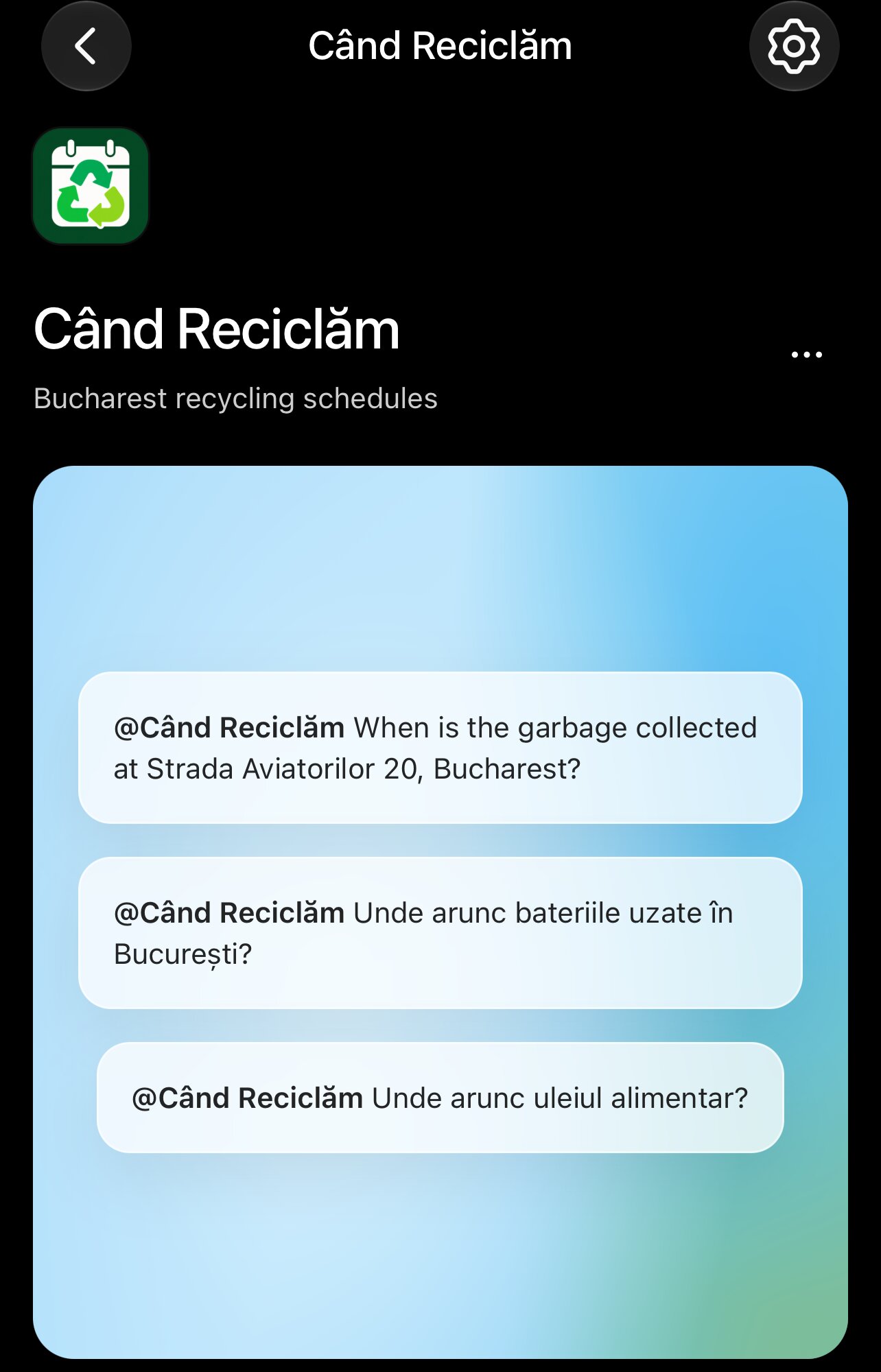
Când Reciclăm (civic tech) — answers a deceptively simple question for residents: when is this type of waste collected, and where do I hand in this object? Behind it: fragmented local public information, normalized and made queryable.
Digital Compass (digital safety) — practical guidance for digital emergencies: account compromise, fraud reporting, safety playbooks.
RoTV Guide (media) — up-to-date Romanian TV data: discovery, schedules and viewing planning, exposed as structured tools.
How is my trip? (travel intelligence) — operational signals and relevant changes for travellers, built on European tourism and travel data.
Four domains, one method: real problem → verified sources → purpose-built MCP tools → security boundaries → testing → operations → distribution. Not one integration repeated mechanically — a reusable adoption model.
In twelve days, I moved from recognizing a new platform opportunity to submitting four production products and obtaining the first OpenAI publication approval. The products and infrastructure already existed at different stages of maturity — that is the point. Platform-shift readiness is not improvising demos under pressure; it is having products and an architecture solid enough to adapt fast when the ground actually moves.
Când Reciclăm, under the surface
A user asks when glass is collected in their area, or where to take an old appliance. The answer arrives in seconds, inside ChatGPT.
Underneath that answer:
- Source identification and verification — locating the authoritative local information and confirming it is current;
- Normalization — turning fragmented, inconsistently published local data into a coherent, queryable structure;
- Purpose-built MCP tools — each with a clear, narrow scope;
- Read-only behaviour — the plugin retrieves and presents; it never modifies anything;
- Response control — answers stay within the verified data;
- Freshness — mechanisms keeping the underlying information current;
- Monitoring and rate limiting — operational visibility and protection of the public infrastructure;
- Public infrastructure, documentation and policies — what separates a demo from a product;
- Distribution through OpenAI — the step that turns a working service into an adopted capability.
Când Reciclăm is open source. The code, the architecture and the method can be inspected, reused and extended by anyone.
🔗 Plugin | 🔗 Source code | 🔗 Product
Reviewed, accepted, published
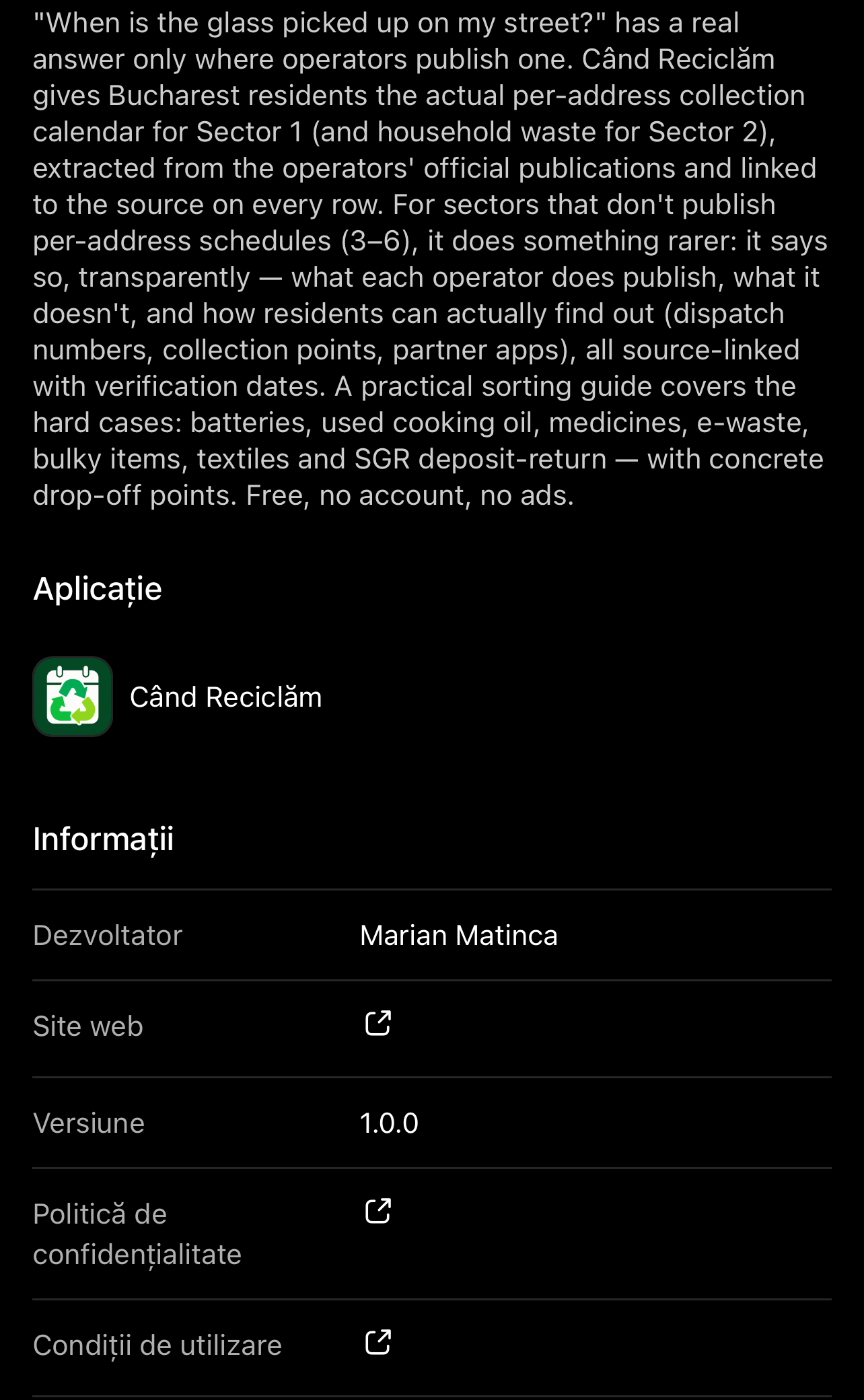
On 21 July, Când Reciclăm was reviewed, accepted and published by OpenAI through its official process. It is live in OpenAI's public plugin directory, inside ChatGPT, today.
The remaining three products are currently in review.
The timeline
- 9 July — OpenAI's plugin platform and distribution path become available;
- 17 July, ~22:00 — first product submitted for review;
- 19 July, by ~23:00 — the remaining three products submitted;
- 21 July — Când Reciclăm reviewed, accepted and published.
Working intelligently with AI
How does one person cover analysis, research, development, testing, documentation, security, operations and distribution across four products in that window?
AI allowed me to compress the cycle — while decisions, architecture and verification stayed under human control.
The method, end to end:
real problem → sources and constraints → product → tools → security → testing → operations → distribution → feedback
AI accelerates every stage of that chain. It does not replace ownership of any of them. This is the line that separates the person who delivers from both the casual chat user and the one shipping generated code they don't understand.
The name of what you just read
One product published, three in review, four domains covered — all personal projects, all built in free time, all verifiable through public code, public infrastructure and OpenAI's public directory.
While the market debates what agentic AI will look like, the platform shift is already here. It rewards a specific profile: recognize the opportunity, select the use cases, adapt the technology, manage the risks, deliver, distribute, obtain real usage.
That is not a presentation skill.
AI adoption is a delivery discipline.
---
Marian Matinca is an IT Manager and ISO 27001 Lead Implementer based in Bucharest. The products described here are personal projects. More at mmatinca.eu.